


In the operation of processes that use big quantities of materials, the achievement of the required moisture content is a cutoff point between good quality granular end-products and failure of products. For the operators of the factories where agrochemical, mineral processing and bulk compounds are processed, the choice of either a Rotary Drum Dryer or Fluidized Bed Dryer determines the efficiency in operation.
Even though both technologies involve the removal of moisture, the way of material transfer within the systems, the tolerance to the fluctuations of the raw materials and the construction limitations are different with the continuous operation of 24 hours 7 days a week.
Heat Transfer and Mechanical Engineering
The main difference between the two systems is in how the raw materials work with the moisture-removing agent.
1. Working Principles of Rotary Drum Dryer
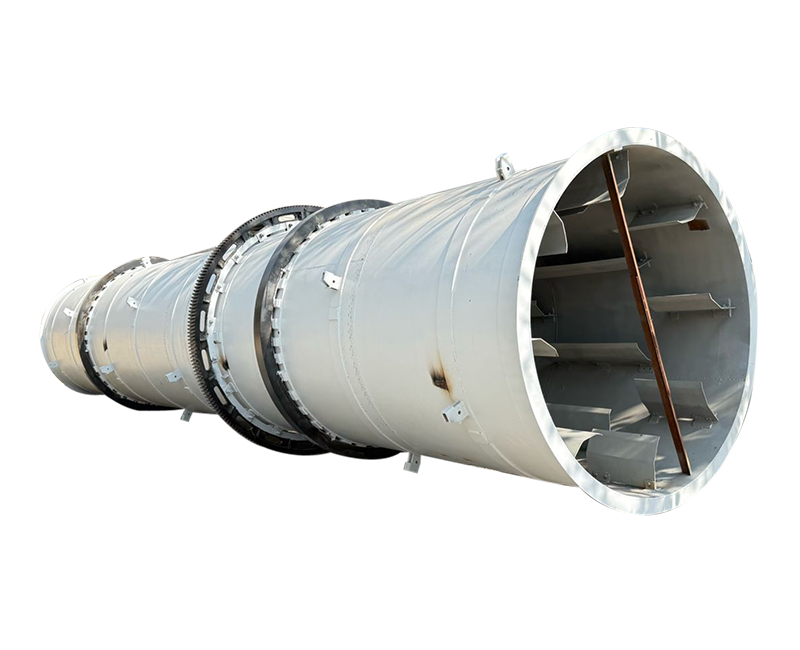
Rotary drum dryer works by means of its turning and utilization of special lifting flights in order to raise the raw materials and shower the water-removing medium at the same time.
- Material processing: The work within a steel drum ensures that raw material which is very wet, sticky or not uniform does not gather into lumps.
- Heat Exposure: The rotating drum operates with precision-engineered tyre rings and rim gears, thus leading to the unhindered flow of the liners and enabling maximization of the surface contact of the heat transfer material.
- Force Transmission: Thanks to the high-torque and powerful driving systems, rotary drums avoid sudden fluctuations in rotational inertia due to sudden changes of moisture level in the feed material.
2. Fluid Bed Dryer Operation
The fluidized bed dryer suspends solid material in a stream of hot air.
- Material Suspension: The suspension process only relies on the air pressure supplied to the air distributor plate.
- Heat Exposure: Heat transfer goes on very quickly due to direct contact of hot air and solids.
- Force Transmission: The rotary drum set relies heavily on the powerful blowers and exhaust fans without the involvement of rotating mechanical systems.
Equipment Comparison: Rotary Drum vs. Fluidized Bed
| Performance Parameter | Industrial Rotary Drum Dryer | Fluidized Bed Dryer |
| Raw Material Tolerance | Handles wide particle size variations, high moisture, and abrasive compounds easily | Requires uniform particle size; prone to clogging with sticky or irregular feed |
| Mechanical Durability | Heavy-duty steel shell, forged tyre rings, and manganese steel liners built for 24/7 wear | Lighter structural body; high wear on perforated air distribution plates |
| Feed Consistency Sensitivity | Low; easily absorbs sudden moisture spikes without operational shutdown | High; sudden moisture spikes cause bed collapse (“de-fluidization”) |
| Thermal & Airflow Control | Excellent tolerance for high-temperature direct gas, coal, or biomass burners | Requires precise, narrow inlet air temperature controls to prevent melt/caking |
| Maintenance Profile | Routine mechanical lubrication of girth gears, rollers, and drive pinions | Frequent cleaning of air distribution plates and dust collection baghouses |
Dealing with Aggressive and Varying Set of Feedstock
In the production world of various industries (such as SSP/NPK fertilizer production, mineral processing, and sand drying), the feedstock that comes from either conventional ball mills or granulators is hardly uniform.
The feed size must be carefully pre-conditioned for a Fluidized Bed Dryer. If the raw compound is too humid or sticky at the surface, particles stick together, large lumps settle on the bottom plate and the fluidization stops immediately, stopping production.
On the other hand, a heavy duty Rotary Drum Dryer is ideal for feed variations. Surface crusting is continually broken up by the mechanical action of the internal flights. The drum is a mechanically driven drum machine that is suitable for processing abrasive minerals, wet phosphate rocks and heavy chemical compounds without the risk of air-plate blinding or process blockage.
Energy Efficiency & Long-Term Maintenance Costs:
Fluidized bed systems are ideal for transferring heat to light, uniform materials, such as pharmaceuticals or fine table salt, but are extremely expensive to operate if large tonnages of heavy materials are being processed, because they use high-pressure air blowers to achieve fast heat transfer.
Rotary drum dryers are found to be more economical in operation for bulk production size from 10 TPD to more than 1500 TPD:
- Reduced Fan Pressure Drop – Airflow can flow through the open drum area without the need for overly high horsepower from the fans as it would with dense fluidized beds.
- Thermal Inertia – Heavy steel drum walls keep the process heat inside, which means less fuel usage by the burners in continuous production runs over multiple shifts.
- Mechanical Longevity – Mechanical wear is concentrated on mechanical wear items that can be replaced, such as drive pinions, support rollers, and internal liners.
Strategic Verdict for Industrial Facilities:
The Rotary Drum Dryer is the unarguable industrial standard for processing plants that are growing daily in plant production, have to minimize unplanned maintenance, and also have to work with hard, high-moisture raw compounds. It is mechanically reliable, resistant to feed variations and has a solid construction, which guarantees continuous and trouble free production.
For more details on custom-engineered drying systems designed for continuous industrial use, visit our solutions as a leading Rotary Dryer Drum Manufacturer or learn how our thermal processing systems are part of complete turnkey solutions with our fertilizer plant manufacturer in India.
Frequently Asked Questions (FAQs)
A: A Rotary Drum Dryer is much more effective with sticky, high moisture or irregular sized feed materials. The continuous mechanical tumbling action and internal flights prevent clumping and ensure material flows without clogging the system. Sticky feeds, on the other hand, result in fluidized bed dryers ceasing to be fluidized and to stop.
A: Rotary drum dryers are large industrial dryers designed for large volume and scalable production. They can easily accommodate continuous operational output from 10 TPD up to 1500+ TPD depending on the diameter of the drum, length of the drum and the configuration of the burners.
A: Rotary drum dryers are designed to make best use of the heat by employing internal flight designs that produce a dense, uniform curtain of material that is directly exposed to the heating gases. Also, they have lower pressure loss of the airflow than fluidized beds, which results in a significant reduction in the electrical consumption of the fan during 24/7 duty cycles.
A: A rotary drum dryer’s key maintenance focuses on the heavy mechanical drive components. Regular maintenance involves checking and lubricating girth gear and drive pinion, checking alignment of support rollers, checking wear of tyre rings and replacing internal manganese steel lifters when handling very abrasive minerals.
A: Yes. Rotary drum dryers are designed to be a custom solution to fit into current processing loops. They can fit in between wet granulation machines (e.g., rotary granulators or mixers) and rapid quench rotary coolers and have built-in automatic PLC controls and can be customized with exhaust dust-collection machines.